
Breathing
Persistent mouth breathing is often directly connected with the position of the teeth and jaws.
Misaligned teeth and jaws can create niches for deposits that are accessible neither to the natural cleaning effect of saliva nor to daily oral hygiene. The result is an increased risk of caries and periodontal disease.
Jaw misalignments that prevent the teeth from biting together correctly also lead to an impaired biting and chewing function. A possible consequence is difficulty eating, accompanied by digestive problems.
An uneven load on individual teeth or groups of teeth can lead to inflammation of the periodontium, to tipping teeth or even to complaints in the jaw joint.
In addition to the functional limitations, many misalignments are also perceived as aesthetically disturbing – often it is the patient who wishes for a correction of the teeth or jaws.
Misaligned teeth and jaws frequently have effects that reach far beyond the mouth.
Persistent mouth breathing is often directly connected with the position of the teeth and jaws.
Speech difficulties such as a lisp can be the result of a misalignment.
Pain in the jaw joint or in the ear – tinnitus, for example – occurs more frequently when the bite is disturbed.
Headaches, up to and including migraine, can be connected with an unbalanced bite.
Tension in the neck and back as well as a curvature of the spine are possible consequences.
Niches that are difficult to clean noticeably increase the risk of caries and of diseases of the periodontium.
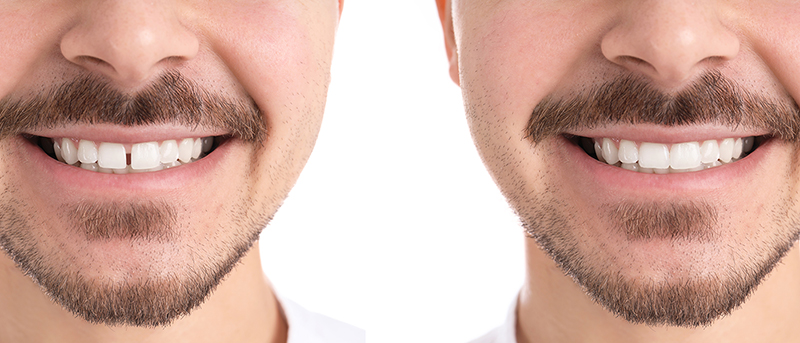
Whether treatment is necessary is something we clarify in an initial orthodontic examination. In doing so we look not only at the position of the individual teeth, but at the interplay of teeth, jaws, jaw joints and muscles.
If a misalignment is recognised early, it can usually be corrected with comparatively simple means. Do get in touch – we are happy to assess your situation.